

While stimulant medications remain the gold standard for treatment of ADHD, alternative options for those interested in seeking them out offer additional possibilities. At Mind-Body Pediatric Psychiatry, our focus on a holistic approach will often lead us to evaluate gentler interventions. Whether we are discussing natural supplements for kids with ADHD or, as in this case, considering saffron for pediatric ADHD, we believe in using the research to evaluate the efficacy of any treatment.
At times, as a parent and clinician, it can feel like there is a constant tide of alternative, holistic options for treating the symptoms of ADHD. But going beyond the hype, and vetting the research is imperative for any provider seeking to provide an integrative path to their patients. Let’s look at the emerging research for crocus sativus, saffron, and its role in pediatric care of ADHD.
Evidence on Saffron; Tradition Meets Science
Saffron has been prized and respected for centuries, but has only recently been thoroughly studied with the clinical rigor we would expect for any modern treatment. Current research shows three key ways that saffron is having an impact:
Similarities to Stimulants
- A randomized, controlled trial found saffron to be as effective as methylphenidate in reducing ADHD symptoms, notably with a more favorable side-effect profile.
Synergies with Low-dose Stimulants
- Combining saffron with a low-dose stimulant may outperform high-dose stimulant alone. This suggests saffron may help reduce overall medication burden, which theoretically may reduce side effects.
Dual benefit with co-occurring anxiety
- Many children and teens with ADHD also experience anxiety. Saffron has demonstrated significant reduction in anxiety symptoms, and is often well tolerated with minimal side effects.
Please Note: Much of this pediatric research originates from Iran and overall quality of studies are limited. We need larger, multinational studies and robust controlled trials to deepen our understanding of these findings.
Saffron’s Support of the Developing Brain
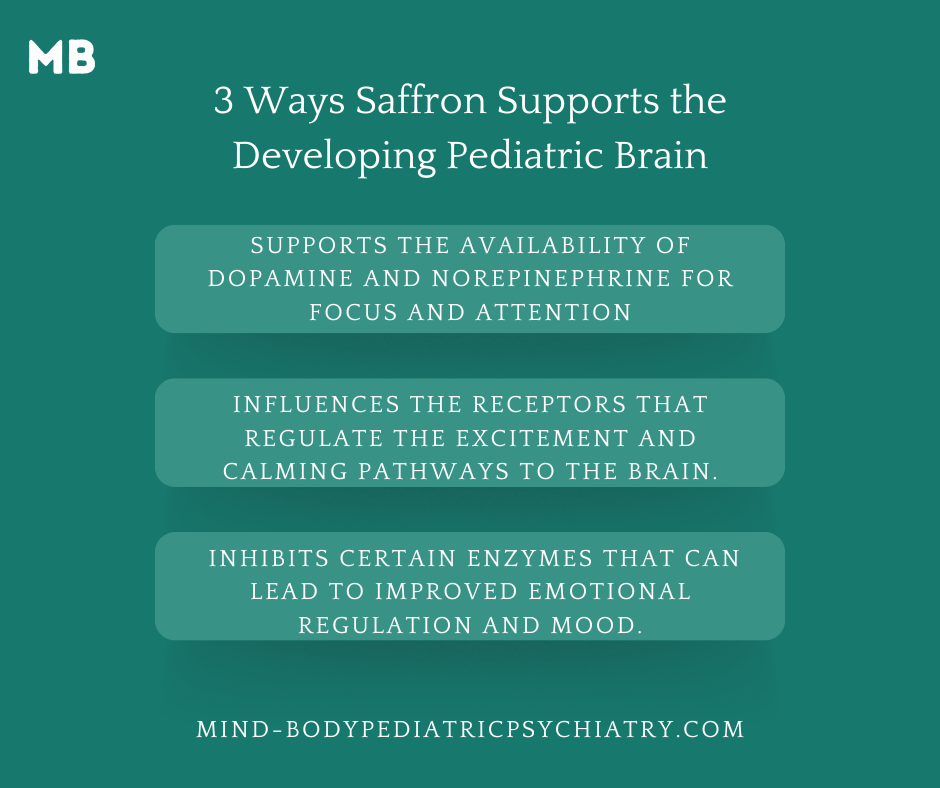
Saffron’s true value lies in its multiple neurobiological effects. It doesn’t do one thing. It does many things. Let’s look at the multiple ways saffron supports brain chemistry:
Monoamine Modulation
- This just means that saffron supports the availability of dopamine and norepinephrine, the key neurotransmitters available for focus and attention .
Glutinate and Gaba Balance
- Saffron influences the receptors that regulate the excitement and calming pathways to the brain.
Enzyme Inhibition
- Saffron may inhibit MAO and acetylcholinesterase, which supports mood, memory, and cognitive flexibility.
These technical, but exciting benefits offer key neurological insight into why families report manifold benefits when it comes to saffron for pediatric ADHD. And, may explain why families often observe improvements not just in attention, but in emotional regulation, memory and cognitive function.
But is it safe!?
The key question, and ultimate arbiter for any parent evaluating an alternate therapy not only comes down to whether the therapy is effective, but, first, is the therapy safe? As parents we should be asking this question.
Saffron has demonstrated a strong safety profile. When side effects do occur, they are typically mild—such as slight appetite suppression or mild GI discomfort—and occur at lower rates than those seen with traditional stimulants.
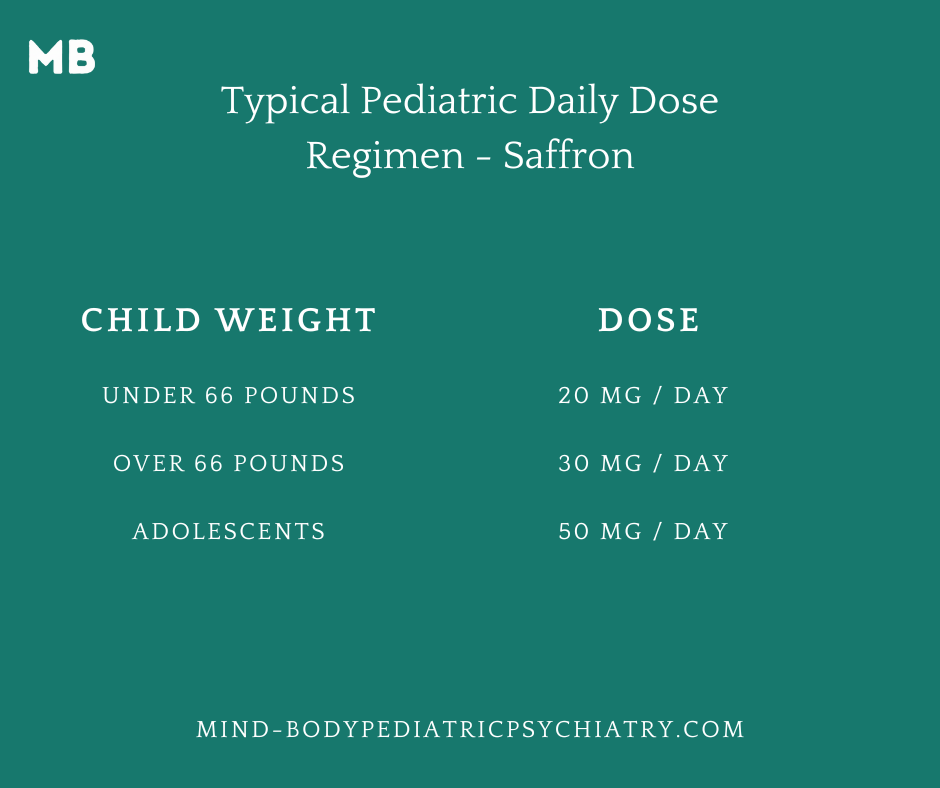
Choosing a safe, high-quality supplement is essential, as not all products are made equally. We are committed to helping you identify reputable, pediatric-appropriate options so you can make informed decisions.
How we guide families on the topic of Saffron for Pediatric ADHD
At Mind-Body, we believe in the power of shared decision making. When considering saffron for Pediatric ADHD, there’s a lot to think about. Including not just how saffron works, but how it aligns with your child’s temperament, needs, and daily life. We discuss your goals in evaluating alternate therapies. Whether you want to improve school performance, to smooth behaviors, or just decrease reliance on medication load. Whatever the case, we’ll work with you to create a cohesive plan to integrate a total therapy plan into the life of your child, whether you decide to go with saffron or not!
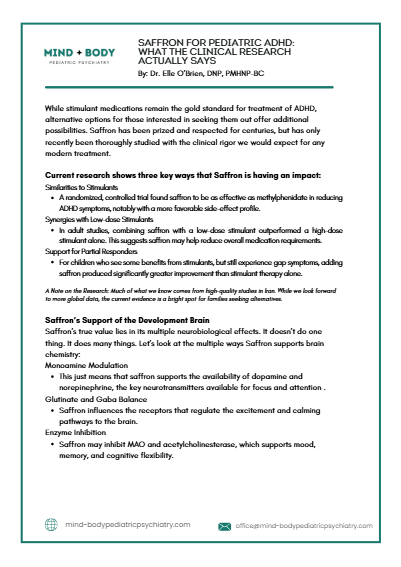 Download our full evidence-based guide here.
This is general education, not to be mistaken for a patient-provider relationship. Please consult with your provider for more information!