


The path to ADHD management takes many paths. Certainly, one of the primary paths is through medication. The gold standard for ADHD treatment. But, not always the path for everyone. In our blog we have discussed different approaches, including saffron and sleep management, but Omega-3 for ADHD is another viable path that is becoming more popular here in Chicago and across the country. Let’s examine why.
Unlocking Nutrition with Omega-3 for ADHD
While therapy and medication are cornerstones of pediatric psychiatric care, many families we work with are looking for evidence-based, natural ways to support their child’s emotional regulation or reduce aggression. One of the MOST researched options in the nutritional bucket is Omega-3 fatty acids. More specifically, EPA and DHA.
Now, parents often say that the supplement aisle in any market can be…overwhelming. What is real? What is…maybe not-so-proven? It’s easy and natural to question whether ‘any of these supplements actually work?’ Especially a jar of…fish oil?
But. Let’s talk about the research. The research consistently shows that children with ADHD have lower blood levels of Omega-3s. So, it stands to reason that increasing those Omega-3s will be beneficial. But, the TYPE matters. Let’s talk about the options.
EPA Omega-3 for ADHD
So many supplements. How to choose? For ADHD, the ratio matters more than the brand name. Clinical reviews suggest that EPA (eicosapentaenoic acid) is the specific component that moves the needle on behavior. And for the proper ratio, you’ll want to look for a 2:1 ratio of EPA to DHA. And how much do you need? Well, the studies indicate you need at least 500 mg of EPA daily to see a clinical improvement in attention
Omega-3 Dosing Guidelines for Illinois Families
Every child is unique, but the evidence and research provides clear direction for families looking at Omega-3 for ADHD. We recommendations daily targets for children and families considering Omega-3 for ADHD at 1,000 mg of combined EPA/DHA with at least 500 mg of EPA. Additionally, and this is the hard part to stick to, we recommend the 90-Day Rule, where you’ll need to consistently build up for three months to see the full benefit.
FAQs on Omega-3 for ADHD
FAQs on Omega-3 for ADHD
1- Can I just give my child more flaxseed or chia seeds instead of fish oil?
- While plant-based sources like flax and chia contain ALA (another type of Omega-3), the body is very inefficient at converting ALA into the EPA and DHA needed for brain function. For a child with ADHD, a direct marine-based source is usually necessary to reach therapeutic levels.
- For example, dietary sources you could consider include salmon, herring, sardines, mackerel, anchovies, and trout. A single serving of salmon or mackerel easily meets or exceeds 750 mg per day. Two servings of fatty fish per week is the standard dietary recommendation. But in most families, that target is…somewhat unlikely, so supplements become a more viable option.
2. Are there side effects I should watch for?
- Omega-3s are very safe, but the most common complaint is the fish burp or mild stomach upset.
- Cheat Code: Try freezing the capsules or switching to a liquid emulsion that tastes like a fruit smoothie. Taking the supplement with a full meal also significantly reduces any tummy issues.
3. My child is already on a stimulant (like Adderall or Ritalin). Can they take both?
- Yes. In fact, some studies suggest that Omega-3s can actually help stimulants work more effectively. If you are looking to manage the overall medication load, sometimes Omega-3s can also provide a path for a lower dose of medication. We often see the best results when nutritional support and conventional medicine work together.
4. How long until I see a change in my child’s behavior?
- Consistency. Consistency. And…you guessed it. You are essentially building new cell membranes in the brain. And that takes time. Most clinical trials show that it takes about 12 to 15 weeks of daily use to see a noticeable shift in focus and emotional regulation.
5. Which brand is best for families in the Chicago area?
- It’s not about the brand. It’s the ratio. In fact, one issue with supplements is that they aren’t regulated by the FDA. But, you can look for the IFOS (International Fish Oil Standards) seal. Brands like Nordic Naturals, Carlson Labs, and Barlean’s are widely available at local Illinois retailers in Naperville, the North Shore, or Oak Park, and consistently meet high purity standards.
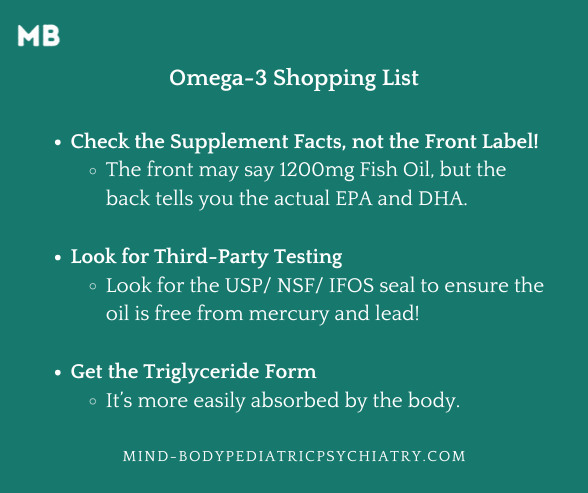
Your Omega-3 Shopping List
- Check the Supplement Facts, not the front label
- The front might say 1200mg Fish Oil, but the back tells you the actual EPA and DHA content. Ensure the EPA is at least 500mg.
- Look for Third-Party Testing
- Choose brands with a USP, NSF, or IFOS seal. This ensures the oil is free from mercury (and lead!).
- Check for the Triglyceride Form
- This version is more easily absorbed by the body.
Final Thoughts on Omega-3 For ADHD
We all know that getting kids to take a supplement is easier said than done. Just remember, if you aren’t able to meet the above dosages, any additional Omega-3s for ADHD is better than none. And while Omega-3s are a powerful supportive tool, they are most effective when used alongside a comprehensive treatment plan.
If you are looking for pediatric psychiatry services in Illinois, including ADHD treatment in Chicago, we are here to help you navigate the options and can help you build a total approach that includes medication management, lifestyle support, and supportive therapy without the long waitlist.
Ready to learn more? Book a free 15-minute phone call to see if we’re the right fit.
This is general education, not to be mistaken for a patient-provider relationship. Please consult with your provider for more information.